


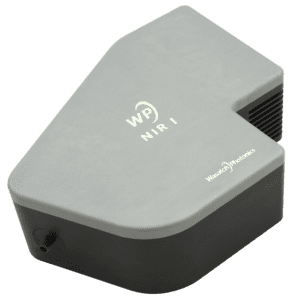
The greatest challenge in compact NIR spectroscopy is collecting enough signal to achieve adequate SNR (signal to noise ratio). With many spectrometers on the market, it’s hard to know which has the performance needed. Here, Wasatch Photonics benchmarks the superior sensitivity, data quality, and reliability of our NIR spectrometers.
InGaAs diode array spectrometers are often light-starved, and require cooling of the detector to reduce thermal noise to an acceptable level. Increasing the acquisition time boosts signal, but results in more noise and compromises the practical speed at which measurements can be made. Using a better spectrometer is a simpler solution that improves spectral quality, LOD, and facilitates more accurate chemometric analysis.
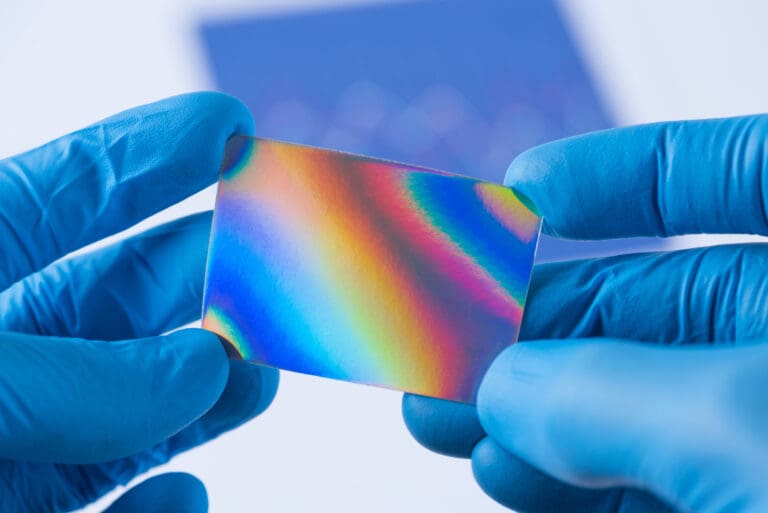
When Wasatch Photonics created the WP 1064 for Raman and broadband WP NIR, they boosted sensitivity in every aspect of the design, supported by the robust, thermally stable mechanics we know our OEMs need. With their own design highly efficient volume phase holographic (VPH) gratings in a diffraction-limited transmissive design, these products deliver high quality NIR data in 1/10th the time of a typical cooled f/4 crossed Czerny-Turner (CCT) NIR spectrometer, and far more reliably.
Find out how photonics techniques can help you in your application